When is a Factory Farm Not a Factory Farm?

Factory farms are often vilified, with varying degrees of justification. But sometimes, it seems to me, the problem with factory farms is that they’re just not enough like real factories.

Let’s start with a report on the condition of one of the egg farms at the heart of the recent salmonella outbreak. Here’s the story, by William Neuman, writing for the NYT, Egg Farms Violated Safety Rules. Here’s the opening paragraph:

Barns infested with flies, maggots and scurrying rodents, and overflowing manure pits were among the widespread food safety problems that federal inspectors found at a group of Iowa egg farms at the heart of a nationwide recall and salmonella outbreak….

The problem, it seems to me, is that these ‘factory farms’ were not actually operating very much like a factory. Sure, they had the scale of a major manufacturing operation. But they were being run like, well, like many small farms are run — rather, errrr, informally. That’s not to say that farms in general are sloppy. But I grew up in a farming community, and I know that most barns are, well, they’re barns. There are flies. There’s manure. There’s pretty much always some animal or another that has escaped its pen or stall or cage, wandering around. There’s always some mess or another to be cleaned up, sooner (or more often) later. None of this is intended as an indictment of farms; far from it. It’s just to say that places where animals are born and raised, where they eat, poop, and eventually die, are unlikely to be scrupulously tidy. Add to that the fact that many farms (not the kind discussed in the NYT story) are small businesses, struggling to get by, run on a tight budget by someone who may or may not have the managerial and organizational skills to run a tight ship.

So there was a lot in the FDA’s description of the state of things at Wright County Egg that didn’t actually surprise me all that much, though the dangers implied by running a farm that way on that scale are pretty clear. To me, Wright County Egg sounds like a small, amateurish farm that happens to have been scaled up to enormous size, and with disastrous consequences.

Now compare the description of Wright County Egg to a modern factory — a place where things are manufactured. Imagine an auto factory (like the one pictured above) or a factory where toasters or computers are assembled. Compared to a farm, a factory is, in contrast, fairly tightly regimented and relatively clean. Of course, that’s a huge generalization. There are factories that use (and abuse) dangerous chemicals, and there are factories that are messy and dangerous and poorly-run. But a well-run factory is clean, tidy, and safe, because the goal of factories is efficiency, and dirt, mess, and danger are all sources of inefficiency. So it seems to me that at least part of the problem at the egg operations at the heart of the salmonella outbreak is that they were operating on the scale of a factory, achieving factory-level outputs, but without the attention to detail that lets good factory managers turn out high-quality products on a massive scale.

Posted in agriculture, ethics, farmers, health, industrial, safety | 2 Comments

GM Salmon: Ethics, Regulation, and Labelling

We are getting closer and closer to seeing genetically-modified salmon on the dinner table.

When that happens (yes, “when”, not “if”) then GM salmon will be the first genetically-modified food animal to be consumed by humans.

Here’s the story, Sarah Schmidt, in the Montreal Gazette: Developer of genetically engineered salmon eyes Canadian regulators.

The developer of genetically engineered salmon for human consumption is now setting its sights on Health Canada, after U.S. regulators on Thursday announced their review of AquaBounty Technologies Inc.’s historic application for the American market is nearly complete.

The U.S. Food and Drug Administration published details of the last stages of its review for AquAdvantage Salmon, made from eggs produced in a hatchery in Prince Edward Island. The genetically engineered fish can grow at twice the normal rate, and the company, headquartered in Massachusetts with Canadian operations in P.E.I. and Newfoundland and Labrador, has been trying for a decade to get approval to become the first genetically engineered animal that people would eat….

A few quick points:

1) The Gazette story quotes an opponent of the salmon as saying that GM salmon are “unnecessary.” Two responses occur to me. First is that products don’t go to market because they’re “necessary” — they go to market because they’re useful to someone. The second response is that fast-growing fish, even if not strictly necessary, are likely to be a boon to the world of aquaculture (and likely to drive the price of farmed salmon down, which is good for consumers). This is even more important than it sounds, if (as James McWilliams argues, in his book Just Food) aquaculture is a crucial element of any sane, environmentally-responsible system of protein production.

2) AquaBounty‘s CEO insists that the American and Canadian regulatory processes are separate. And technically, that’s true. But as was pointed out in a story I blogged about last year, once the FDA approves the fish, then under international trade laws, the Canadian government will likely have to accept the product too.

3) As I also pointed out in that same blog entry last year, AquaBounty once upon a time featured a promise, on its website, to make sure its salmon are labelled as genetically modified, once they reach market. And that promise seems to have disappeared from the company’s website. And the Gazette story says that the FDA will be considering whether to require labelling. I suspect it’s unlikely that the FDA will end up requiring labelling, but if it does, that could pose serious marketing problems, not least because major grocery chains have thus far been very hesitant to allow positively-labeled products into their stores.

4) I’m on record as saying that, according to my best reading of the scientific consensus, there’s no particular risk from GM foods. But I’ve also said that the environmental impacts are less clear. If there is any reason to be hesitant about GM foods, it has to lie in ecological impact. In that regard, AquaBounty’s website has a useful explanation of why the company believes its salmon pose no environmental threat. (Basically, they’re making only sterile fish, i.e., ones that cannot breed, so there’s no risk of them interbreeding with wild salmon. Also, the company points out that farmed salmon generally do poorly when they escape to the wild.) Critics, of course, are unlikely to be convinced. Once you’ve called a thing “grotesque” (as one of the critics quoted in the story does) you’ve signalled that you’re not really looking for those kinds of assurances in the first place.

Posted in aquaculture, biotechnology, ecosystems, ethics, fisheries, genetic modification, labeling, science | 3 Comments

GMO Vigilantes

The world of GM foods is apparently reinventing the spaghetti western. In Italy these days, the debate over GM has turned into a wild-west-style battle between vigilantes.

Here’s the story, from Elisabeth Rosenthal, writing in the NYT: In the Fields of Italy, a Conflict Over Corn.
Here are some key bits:

Giorgio Fidenato declared war on the Italian government and environmental groups in April with a news conference and a YouTube video, which showed him poking six genetically modified corn seeds into Italian soil.

The seeds, known as MON810, are modified so that the corn produces a chemical that kills the larvae of the corn borer, a devastating pest. Yet while European Union rules allow this particular seed to be planted, Italy requires farmers to get special permission for any genetically modified, or G.M., crop — and the Agriculture Ministry never said yes.

On Aug. 9, 100 machete-wielding environmental activists from an antiglobalization group called Ya Basta descended on Vivaro and trampled the field before local police officers could intervene. They left behind placards with a skull and crossbones reading: “Danger — Contaminated — G.M.O.”

It’s interesting to see pro-GM farmers getting in on the vigilanteism. Historically, GM-related-lawlessness has mostly been the domain of anti-GM protestors. (See, e.g., this 2008 story about vandalism of GM crops in the UK.) Of course, neither pro- nor anti-GM vigilanteism can be ethically justified very easily. Disagreement with the law doesn’t license you to take matters into your own hands. Nor does passionate belief in your cause. Certainly, under certain circumstances, civil disobedience can be justified. But on any reasonable view, and in any nation generally subject to the rule of law, the conditions under which vigilante action is justified are relatively narrow. And the onus is on the law-breakers to make their case. (For a useful philosophical discussion of the issues, see this article: Civil Disobedience.)

(And here’s a version of the story, from last week, that focuses a bit more on Mr. Fidenato. By Colleen Barry, writing for The Associated Press: Italian farmer pushes genetically modified crops.)

(Thanks to Sheldon for suggesting I blog about this.)

Posted in activism, agriculture, biotechnology, ecosystems, environment, farmers, genetic modification, international, regulation | 10 Comments

The Ethics of “Healthy” Bacon

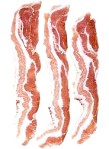
bacon ethicsThis is the tip of the proverbial iceberg. Here’s the start of the story, from ABC Science: ‘Healthy bacon’ patents raise questions
Monsanto has filed patents that cover the feeding of animals soybeans, which have been genetically modified by the company to contain stearidonic acid (SDA), a plant-derived omega-3 fatty acid.

“The invention relates to the enhancement of desirable characteristics in pigs and/or pork products through the incorporation of beneficial fatty acids in animal feed or in animal feed supplements,” reads one patent application….

This story raises a whole slew of ethical issues: from genetic modification of plants (for animal feed), to the patenting of life forms, to contentious health claims (explicit or implied). The ABC story focuses on patenting, but my interest (here) is on the health claims angle. But it turns out the two issues are related, given that (according to the legal experts cited) the patentability of the pigs involved here depends at least in part on whether their meat can be shown to have some positive health effect.

But what will raise eyebrows among nutrition experts (or maybe just anyone with a bit of common sense) is the idea of ‘healthy bacon.’ It’s worth noting, of course, that there’s no smoking-gun quotation from Monsanto, here, claiming that the meat from their innovative pig will actually be healthy. But the headline writer obviously took the bait. The new bacon is intended to have heightened levels of omega-3 fatty acids, and those are supposed to be good for you. So, presto! “Healthy bacon.” Yeah, right.

This, of course, is just a fancier version of a phenomenon we’ve already seen — food companies bragging about the trace vitamins in their sugary cereals, or the calcium in their chocolate milk. The point is not that these claims are false — they’re not — but that they’re misleading. If anyone buys omega-3 bacon because they think it’s going to be good for them (and yes, there will be such people) they will have been misled in a dangerous way. And as new and more sophisticated technology comes to be applied to food, we’re only going to see more of this sort of thing. Don’t get me wrong; I’m no luddite. I’ve nothing against technology. But the food industry (and, surely, regulators) are going to have to adapt to new possibilities and adopt new and more sophisticated understandings of their obligations if they’re going to serve consumers well.

Posted in biotechnology, ethics, genetic modification, health, health claims, labeling, nutrition, science | 10 Comments

Battery Cages, Animal Welfare, and the Environment

hen in a battery cageSeemingly simple issues seldom are, especially when it comes to food ethics. Sometimes what seems like a simple question of needing to “change how we think” or to “stop corporate greed” or “get back in touch with our food” turns out to be slightly more complex.

Check out this brief piece from the NYT:
A Hen’s Space to Roost

Which came first — consumer preference for humane farming, or pressure from animal welfare advocates?

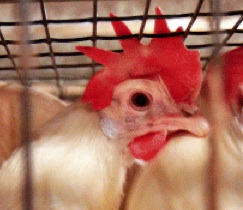
Some combination of the two is driving big changes in the industrialized treatment of farm animals, including egg-laying hens, the vast majority of which live out their lives packed tightly in “battery cages”….

A couple of thoughts…

First, it’s worth pointing out a distinction that this story glosses over, namely the philosophical (and practical) difference between animal rights, on one hand, and animal welfare, on the other. (Basically, you can believe that the welfare of animals matters — that we shouldn’t be unnecessarily cruel to them, for example — without thinking that they are the bearers of anything as philosophically fancy or practically demanding as rights.)

Second, we ought frankly to recognize the trade-offs involved in different methods of agriculture. I’ve recently been reading Matt Ridley’s useful book, The Rational Optimist. In one passage, Ridley points out that while concerns about animal welfare are legitimate, that concern is to a certain extent in tension with environmental concerns. Dense farming (including things like the use of battery cages) uses less land and is generally more environmentally friendly than less-dense (e.g., free range) farming, per unit of output. So what we should be looking for is not just the method of raising egg-laying hens that minimizes cruelty and keeps costs reasonable; we also want a method that does those things at a reasonable level of environmental impact.

Posted in agriculture, animal welfare, environment, ethics, values | Comments Off on Battery Cages, Animal Welfare, and the Environment

Organic Pesticide Food Labels?

When organic foods are produced using organic pesticides, should consumers be told so by means of labels?

Many people think “organic” means that no pesticides have been used, but strictly speaking that’s false. “Organic” actually means that no synthetic pesticides have been used. But “natural” pesticides are sometimes allowed. Some of those are chemicals/minerals like copper or sulfur. Others are plant extracts like pyrethrum and rotenone. Even more popular is the bacterial toxin Bt. (See Wikipedia here.) Nicotine is apparently sometimes used as an insecticide, though my reading of the U.S. standards, at least, suggests that nicotine is currently forbidden. (For more info, see this document from the Soil Association: Pest control.)

The fact that such organic-friendly pesticides are natural of course does not mean they’re safe. All are used because they are deadly to at least something. Some are also hazardous to the humans applying them, or to the environment. (Rotenone, for example, is apparently somewhat toxic to humans, and highly toxic to fish. And sulfur poses a risk to workers’ eyes). So I wouldn’t be surprised if there are consumers out there who would want to know if their food had been sprayed with substances like these.

So, has anyone ever suggested that foods raised through use of such organic pesticides be labeled? Now, I’m not suggesting there’s any actual risk to consumers. But then, people often ask for labels even when there’s no evidence of actual risk to consumers.

(See also this Business Ethics Blog entry, “Organic:” Not Synonymous With “Ethical”.)

Posted in agriculture, environment, farmers, labeling, organic, safety | Comments Off on Organic Pesticide Food Labels?

Should Companies Label Genetically Modified Foods?

Since this blog is relatively new, readers may not have seen my postings (on my Business Ethics Blog) about the labelling of GM foods. (See here and here.)

This is a topic I’ve given considerable thought, and have published on (see below).

My specific interest is in whether there is a corporate ethical obligation to label GM foods as such, in countries (like Canada and the U.S.) where it’s not required by law. I argue that there is no such obligation. The basics of my argument are simple. Here it is, very briefly:

First, human health. Companies would have an obligation to label GM foods if there were sufficient credible scientific evidence of risk. But there isn’t. Yes, GM critics can point to a few studies. But scientific consensus (including meta-analyses by impartial scientific bodies) is that GM foods per se pose no special threat to human health. A well-intentioned business is justified in accepting that consensus.

Second, consumer rights. Do consumers have a right to know whether their food is GM? No. The language of rights is potent moral language. We reserve it (or should reserve it) for protecting interests that are central to our wellbeing. Think of other situations in which we have a right to a piece of information. When accused of a crime, we have the right to know what we’ve been charged with — or else how can we defend ourselves against powerful government agents? When we’re sick, we have a strong right to be told our diagnosis — without that, how could we participate in decision-making about our own healthcare? These are things that are of central value to us, and are widely culturally acknowledged as such. The genetic status of our food just isn’t in that category. Some people may be interested in knowing that information, but that doesn’t mean they have a right to it. It’s an interest that can at any rate be satisfied in other ways, e.g., by niche marketing and negative (“GM Free!”) labelling.

Third, the environment. My understanding is that there is more scientific worry about GM crops from an environmental perspective than there is about GM foods from a health perspective. That’s worth noting. But the question then becomes whether labeling is a good way of dealing with those worries. I think it’s not. Large-scale environmental concerns are not well served by decision-making on an individual level, which is what labelling promotes. If GM crops are ecologically dangerous (and there’s nothing like scientific consensus on that, either), that would be an argument for government action, not niche consumerism.

So, I conclude that there’s no ethical obligation for food companies to engage unilaterally in labelling genetically modified foods. I’ve presented this argument to a number of audiences, and in a peer-reviewed academic journal. I’ve yet to hear a good counter-argument in response. If you know of one, I’d honestly be happy to hear it!

(Here’s a link to the abstract & publication information for the paper I co-authored on this topic, “Corporate Decisions about Labelling Genetically Modified Foods,” by Chris MacDonald and Melissa Whellams, Journal of Business Ethics, 2007, Volume 75, Number 2, 181-189.)

Posted in agriculture, biotechnology, ecosystems, ethics, genetic modification, labeling, marketing, regulation, science | 63 Comments

Part-Time Vegetarianism

Ethically speaking, does vegetarianism need to be an all-or-nothing thing? The current issue of Time has this piece on the topic: Weekday Vegetarians

Part-time vegetarians, a.k.a. flexitarians, choose what to eat and when. The popular Meatless Monday movement, which began in 2003, has been backed by many celebrities, including Paul McCartney, who has spearheaded his own Meat Free Monday campaign. Last year the Belgian city of Ghent picked Thursday as its Veggiedag, calling for meat-free options to be served that day in schools and public institutions….

Interestingly, the head of PETA (not known for its easy-going attitude on the issue) has this to say:

“Absolute purists should be living in a cave,” says Ingrid Newkirk, president of People for the Ethical Treatment of Animals (PETA). “Anybody who witnesses the suffering of animals and has a glimmer of hope of reducing that suffering can’t take the position that it’s all or nothing. We have to be pragmatic. Screw the principle.”

It’s probably worth pointing out that the extent to which part-time vegetarianism makes sense depends on your reasons. If you are a vegetarian for environmental reasons, then this sort of ‘harm reduction’ strategy makes good sense. We all have some impact on the environment. No one has zero impact. As good citizens of the world, we all have some obligation to make sure our impact is reasonable (though just what that means is very much open to debate). If, on the other hand, you are a vegetarian because you think animals have rights, then it seems to me that the part-time strategy makes less sense. After all, if you think animals have rights, then you’re still doing something unethical if you merely violate fewer, rather than more, animals’ rights.

Of course, that’s looking at it from the point of view of the individual consumer. For people interested in the good consequences that come from reducing the amount of meat eaten, every convert — even a part-time one — is a step in the right direction.

Posted in activism, animal welfare, environment, ethics, vegetarianism | 2 Comments

Is PepsiCo Breaking its Promise?

Maybe keeping a promise is the real ‘Pepsi challenge.’

A few months ago, I blogged (on my Business Ethics Blog) about a decision by PepsiCo to voluntarily stop selling sugary drinks in schools by 2012. Now there seems to be evidence that they’ve violated that decision.

Here’s PepsiCo’s press release (from March 2010). It says, in part:

PepsiCo (NYSE: PEP) announced today it is voluntarily adopting a new global policy to stop sales of full-sugar soft drinks to primary and secondary schools by 2012. The industry-leading policy establishes for the first time a consistent global approach to the sale of beverages to schools by a major beverage company.

The policy applies in all countries outside the United States, and is generally consistent with the company’s existing U.S. policy, which remains unchanged.

Now, check out this item, from the Richmond, Indiana news source Pal-Item.com: High school signs contract with Pepsi, which begins:

Union County High School has signed a new five-year contract with Pepsi, ending its exclusive contract to sell only Coke products in the building.

Certainly doesn’t look good. The PepsiCo press release doesn’t give details of its US policy (anyone know where to find it?) But the overall impression is that PepsiCo is committed to not selling sugary drinks to kids at school.

Now the details of the news story are vague. It doesn’t say what kinds of PepsiCo products will be sold under the new contract. Maybe only non-sugary drinks will be sold. But that seems pretty unlikely: surely that fact would be pretty newsworthy.

(Hat tip to Marion Nestle, on Twitter, who attributes the find to Michelle Simon.)

[Note: this blog entry was altered slightly, about 5 minutes after publication, to clarify the nature of the apparent conflict.]

Update!
Here’s an important update from Michele Simon, with a statement from PepsiCo.

Posted in ethics, kids, marketing, nutrition | 1 Comment

Does it Matter if Consumers Understand Food Labels?

I recently expressed my doubts about the power of food labels to empower consumers across the full range of ethical issues related to food. But, at least implicitly, I accepted that nutrition labelling is the exception, the obviously-empowering form of labelling. But of course, even that is too optimistic.

Here’s the story, by Sarah Schmidt, for Postmedia News: Health Canada survey suggests nutrition labels confuse consumers

Consumers are utterly confused by the nutrition facts table on the back of prepackaged foods meant to help shoppers make healthier food choices, a new Health Canada survey has found.

The government introduced mandatory nutrition labelling rules for all prepackaged foods in 2003 so consumers could make informed food choices, but focus groups have delivered a blunt message to Health Canada and the food industry. In addition to “virtually ignoring all the information on the right-hand column” that details what percentage of a day’s worth of nutrients the serving provides, “consumers are also perplexed by information relating to serving sizes, which often don’t seem to be realistic….”

Now, the fact that nutrition labels don’t work well doesn’t mean we should do away with them. There are two reasons why not. First is this: the fact that current labels don’t do a good job of informing consumers doesn’t mean that labeling in general is useless. It might just be that we need new, innovative labels. The second reason is that consequences aren’t all that matter in the world. Sometimes we provide things not because of the good outcomes they’ll produce, but because they protect or advance some important right. Now, whether or not consumers have a right to nutritional information is not a straightforward thing to figure out. (Rights don’t just spring into being from nowhere; they have to be grounded in the need to protect some important interest.) We’ll leave that argument for another day. For now, it’s just worth pointing out that labels (and other mechanisms) can be valuable for those 2 different reasons: either because they promote some good outcome, or because they fulfill some right.

Posted in activism, consumerism, labeling, nutrition, values | 3 Comments